Customers often ask whether we'll spray or roll their walls. The honest answer: it depends on the surface, the room, and whether you're living in the house. Each tool has a job it does best.
Spraying
A paint sprayer puts on a fast, very smooth, even coat with no brush or roller marks.
- Best for: cabinets, doors, trim, ceilings in empty rooms, fences, and large exterior areas.
- The catch: paint mist (overspray) travels, so everything nearby has to be masked and covered first: floors, windows, fixtures, furniture.
- On walls, sprayed paint is often back-rolled, meaning a roller goes over the wet paint to even out the texture and work it into the surface.
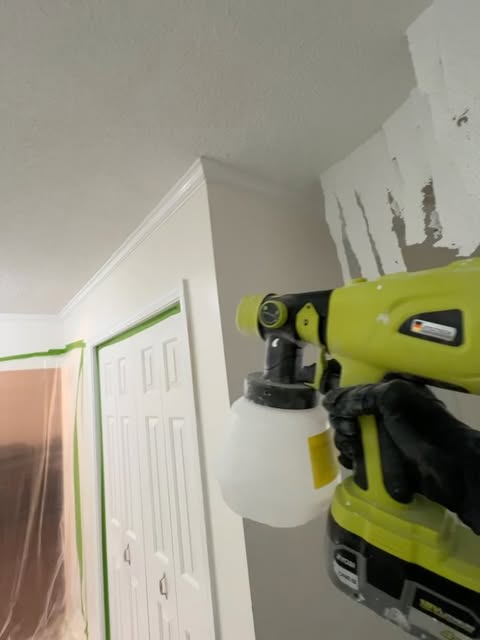
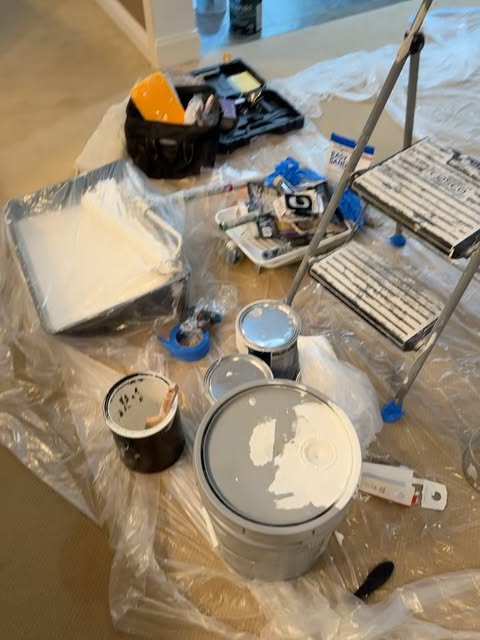
Real Roll Up & Shine jobs: doors and closets taped off before spraying, and floors fully covered before we start.
Rolling
The roller is the workhorse for walls and ceilings, especially in a home where people are living.
- Best for: walls and ceilings in furnished rooms.
- Less masking than spraying, so it's practical room by room.
- The roller cover matters: a short nap for smooth walls, a thicker nap for textured or rough surfaces like stucco or brick.
Brushing
Brushes do the detail work no other tool can.
- "Cutting in": the sharp line where a wall meets the ceiling, trim or another color.
- Detailed trim, window sashes, small touch-ups and tight spots.
Most jobs use all three
| Surface | Usual tool |
|---|---|
| Walls & ceilings (lived-in home) | Roller + brush for edges |
| Empty rooms / new construction | Sprayer, often back-rolled |
| Cabinets & doors | Sprayer for a smooth, factory-like finish |
| Trim & details | Brush or sprayer |
| Fences & large exteriors | Sprayer |
The tool matters less than the prep. Covering, taping and cleaning are what make any finish look professional.
Not sure what your project needs?
Text us a photo on WhatsApp. We'll tell you how we'd do it and send a free quote.
Text us on WhatsApp